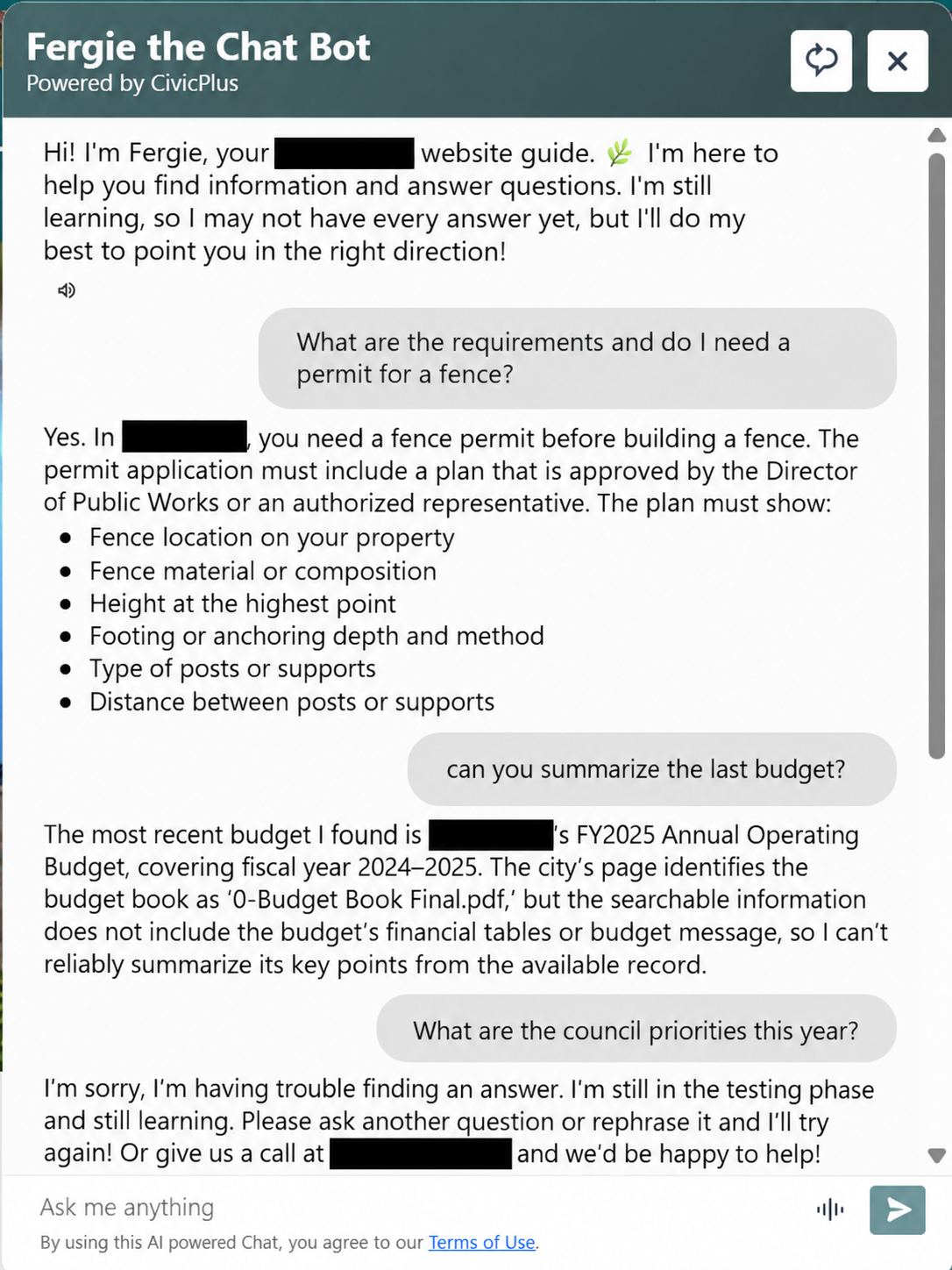
The assistant answered the basic permitting question and identified several items that should appear on the plan.
We asked Curia.IQ (a City in Iowa), CivicPlus (a St. Louis Suburb), and CITIBOT (a city in Metro Atlanta) the same real-world municipal questions. Compare using real municipal questions on permits, budgets, and council priorities in this 2026 civic AI benchmark. The differences appear not only in whether an answer was returned, but in how much useful information a resident received before being sent somewhere else.
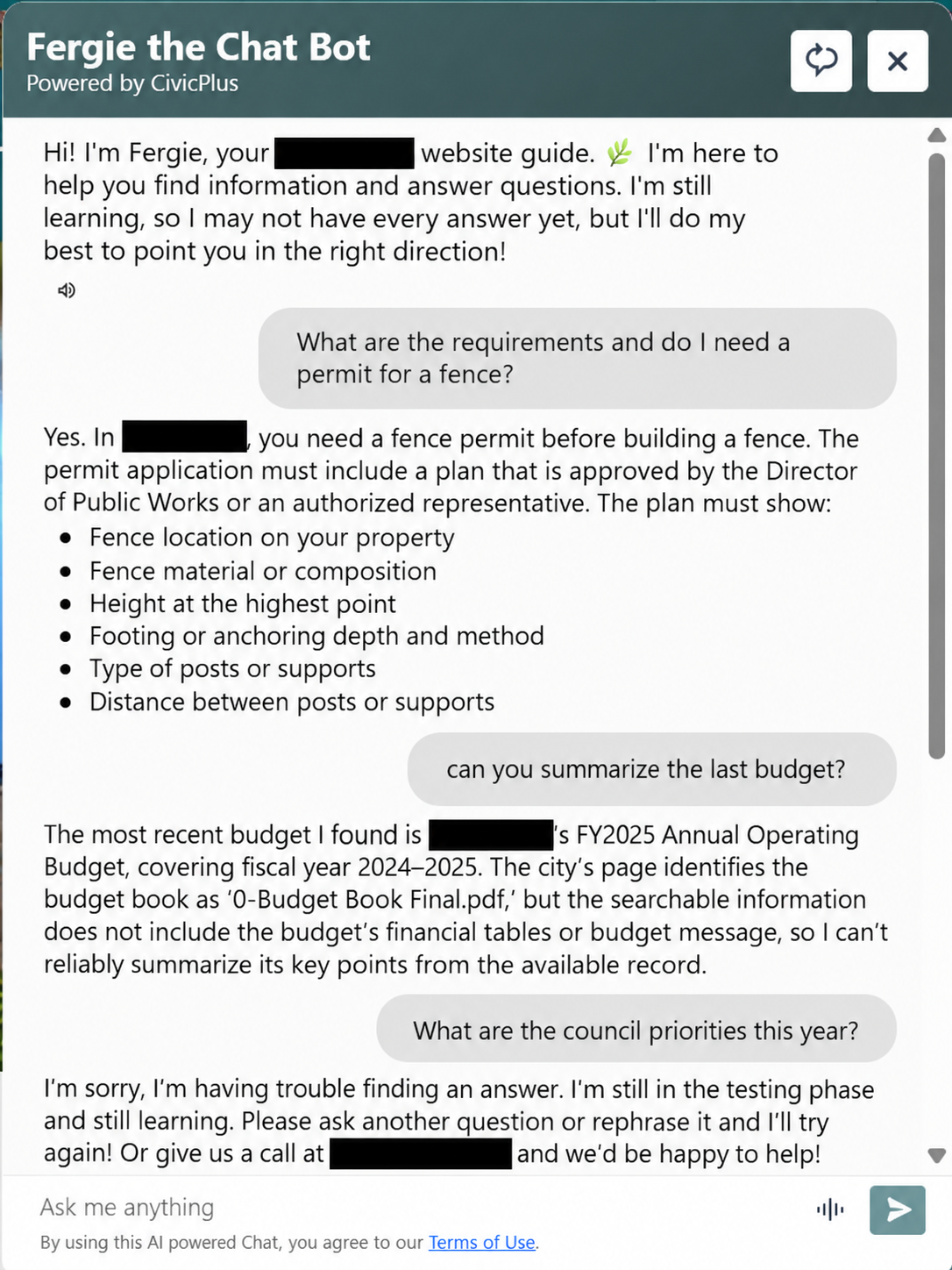
The assistant answered the basic permitting question and identified several items that should appear on the plan.
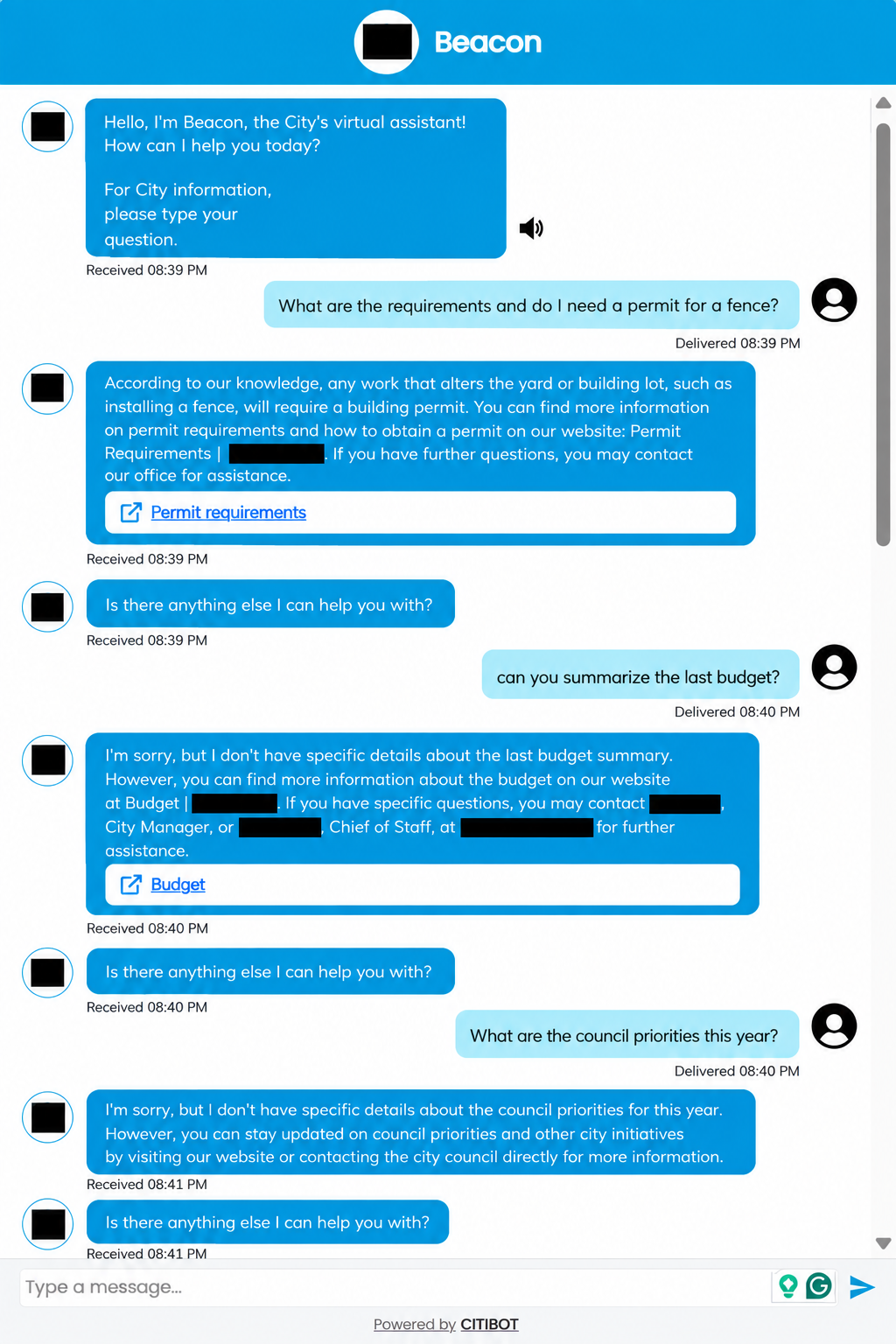
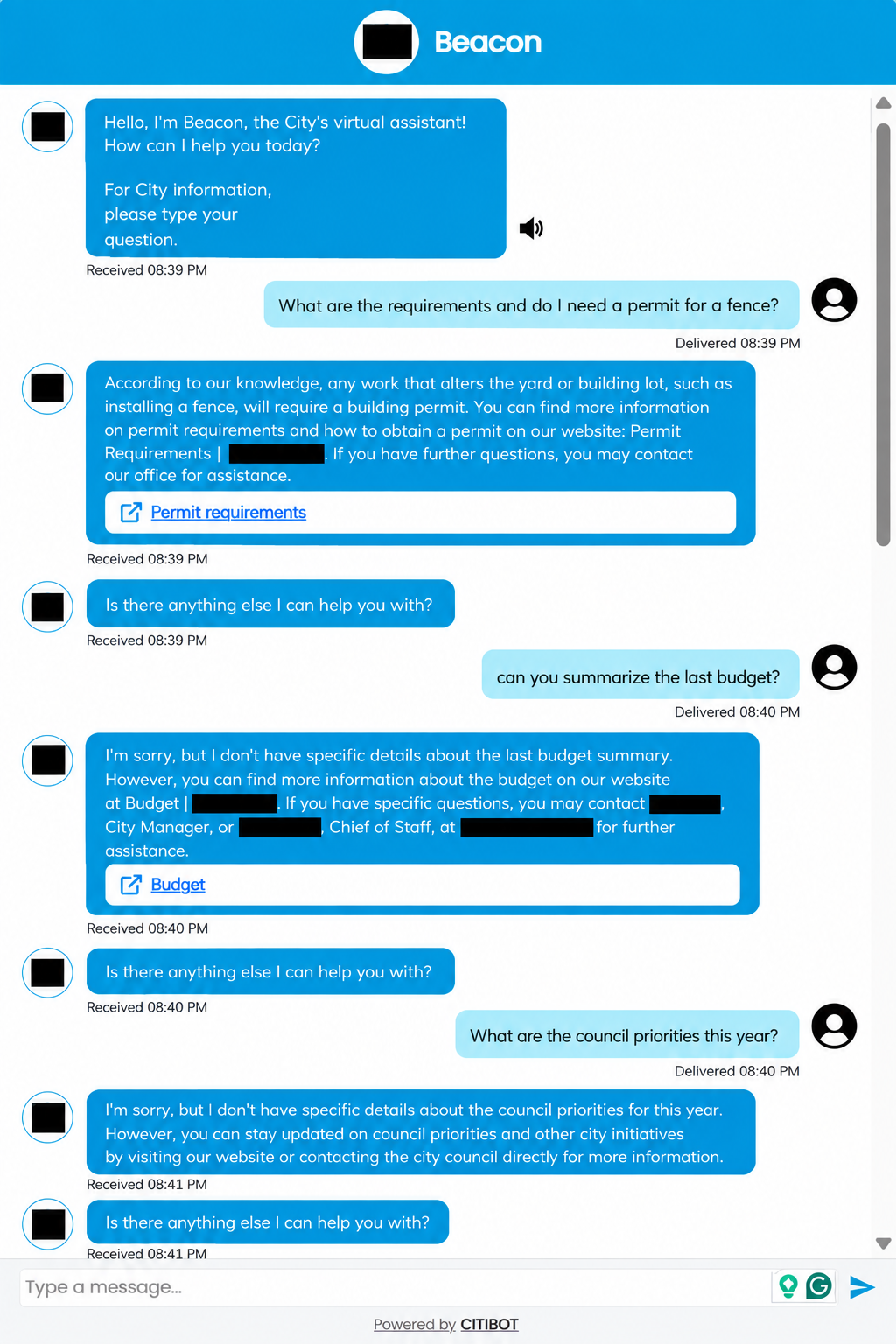
The answer provided the basic requirement, then directed the resident to the municipality's website for additional information.
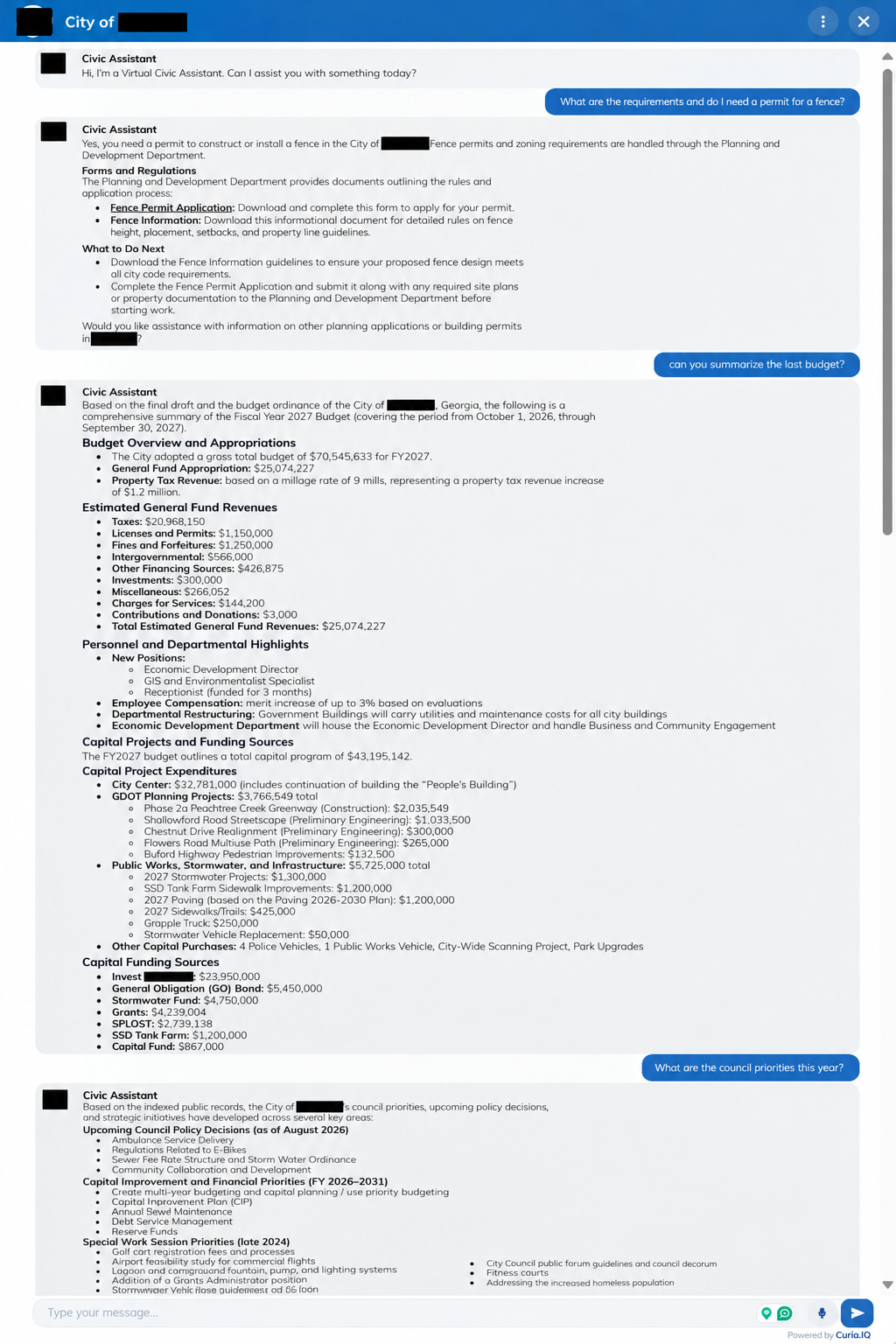
The response went beyond confirming that a permit was required. It surfaced the department, application material, regulatory guidance, and steps the resident could take next.
In this test, all three systems helped with the basic permitting question. The distinction was how much work remained for the resident after receiving the answer.
The response identified the budget record, but the resident did not receive the requested summary.
The resident was pointed toward a budget page and staff contacts, but the requested budget summary itself was not provided.
Curia.IQ returned an actual budget summary, including process, service areas, public-safety spending, revenue information, budget documents, and additional context.
Curia.IQ is designed to retrieve from indexed municipal information and synthesize that material into a usable answer while still preserving the connection to the underlying public records.
The assistant reported that it was having trouble finding an answer and suggested asking another question or contacting the municipality.
The response provided a path for the resident to continue looking, but did not answer the priorities question directly.
Curia.IQ synthesized information across indexed public records and organized the answer into current policy decisions, financial and capital priorities, work-session topics, and related initiatives.
Council priorities may be distributed across agendas, minutes, budgets, capital plans, work sessions, staff reports, and other public records. This test illustrates why retrieval across those sources can matter.
The table below describes the responses observed during this specific benchmark session. It is not intended to represent every configuration or deployment of another vendor's product.
| Observed behavior | CivicPlus | CITIBOT | Curia.IQ |
|---|---|---|---|
| Answered the basic fence-permit question | Yes | Yes | Yes |
| Provided detailed, actionable permit next steps | Partial | Partial | Observed |
| Produced the requested budget summary | Not observed | Not observed | Observed |
| Returned specific council priorities | Not observed | Not observed | Observed |
| Synthesized information into a direct resident-facing answer | Limited in this test | Limited in this test | Observed |
| Required the resident to continue searching elsewhere | In some responses | In some responses | Reduced in this test |
When evaluating AI tools for government use, performance should be considered alongside governance, data quality, and ongoing monitoring, principles reflected in the U.S. Government Accountability Office’s AI Accountability Framework .
A resident may ask one simple question, while the information needed to answer it lives across webpages, budget books, agenda packets, meeting minutes, ordinances, capital plans, departmental documents, and other public records.
Instead of treating the municipal website as a collection of links, Curia.IQ is designed to use indexed public information as a knowledge source—allowing the assistant to answer the resident's question directly while connecting that answer back to the underlying records.
The benchmark used publicly accessible municipal chatbot interfaces and asked each system the same or substantially identical questions covering a permit requirement, an annual municipal budget, and current city council priorities.
Screenshots are presented so visitors can review the full observed responses rather than relying only on selected excerpts or summaries. City-identifying and personally identifiable contact information has been redacted from the published screenshots.
Give us a real resident question. We can demonstrate how Curia.IQ retrieves information from your municipality's public content and turns it into an answer residents can actually use.
Request a Live Benchmark →